
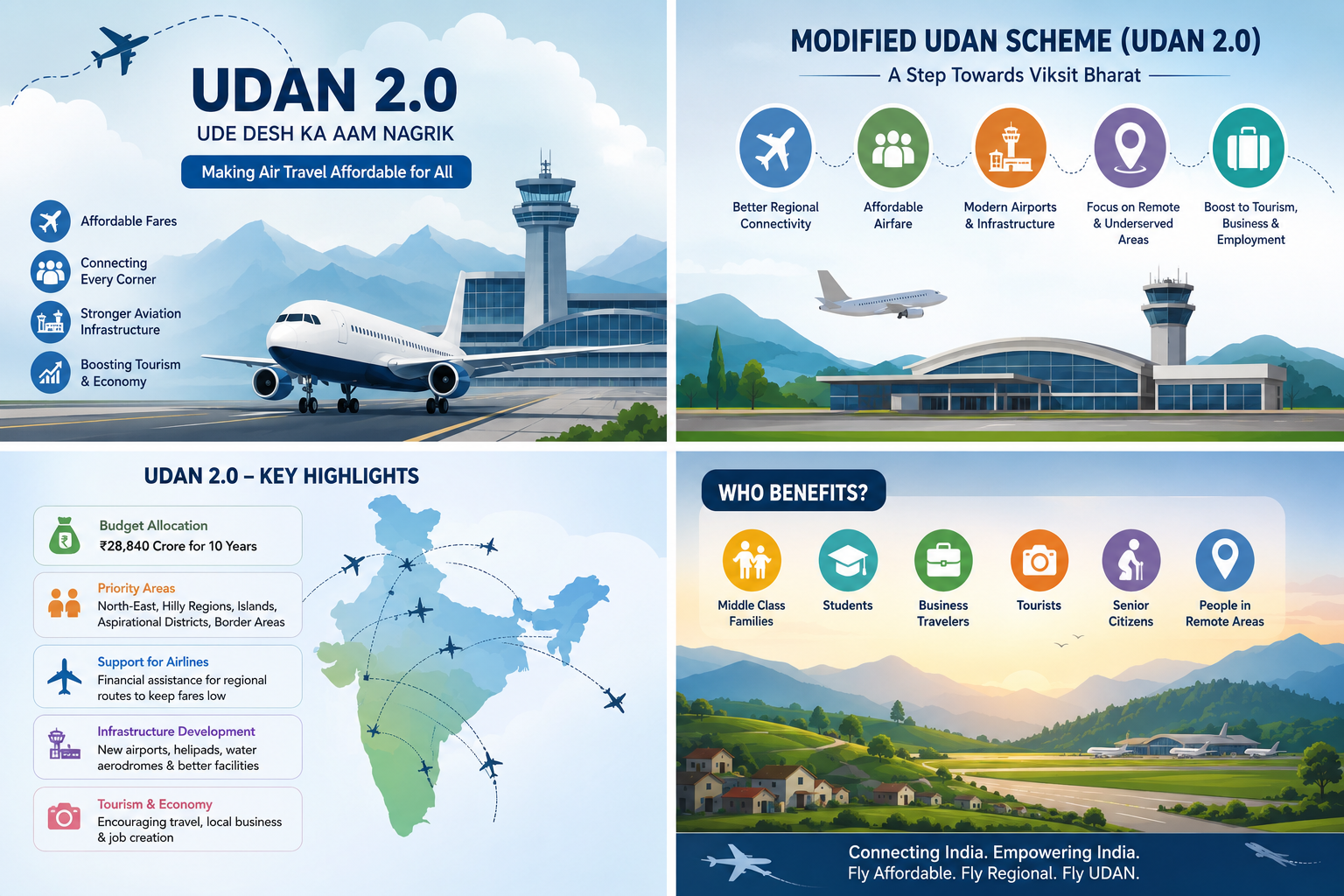

Modified UDAN Scheme (UDAN 2.0) – Complete Details
Scheme Name
Modified UDAN Scheme (UDAN 2.0)
Full Form: Ude Desh ka Aam Nagrik (Let the Common Citizen Fly)
Launched By: Government of India
Launch Date: 4 July 2026
Announced By: Prime Minister Narendra Modi
Ministry: Ministry of Civil Aviation
Objective
The Modified UDAN Scheme aims to:
Strengthen India’s domestic aviation network.
Make air travel affordable for ordinary citizens.
Improve regional air connectivity.
Connect remote, hilly, border and underserved regions.
Promote tourism and local businesses.
Generate employment through aviation infrastructure.
Budget
The Government has allocated approximately ₹28,840 crore for the next 10 years to implement the modified scheme.
Key Features
1. Affordable Airfare
Passengers can travel on selected regional routes at subsidized fares.
2. Better Connectivity
More airports, heliports and water aerodromes will be connected under the scheme.
3. Focus on Remote Areas
Priority will be given to:
- North-East India
- Himalayan states
- Islands
- Aspirational districts
- Border regions
4. Support for Airlines
Airlines operating regional routes receive financial assistance to keep ticket prices affordable.
5. Infrastructure Development
The scheme supports:
- Airport modernization
- New terminal buildings
- Runway upgrades
- Better passenger facilities
6. Tourism Boost
Improved air connectivity is expected to increase tourism and regional economic development.
Who Benefits?
- Middle-class families
- Students
- Business travelers
- Tourists
- Senior citizens
- Residents of remote regions
- Small businesses
- State tourism sectors
Eligibility
There is no separate application process for citizens.
Anyone booking a flight on an eligible UDAN route can benefit from subsidized fares, subject to seat availability and airline policies.
Expected Benefits
Lower airfare on regional routes. Increased number of operational airports. Faster travel between smaller cities. Higher tourism revenue. Better investment opportunities in Tier-2 and Tier-3 cities. Employment generation in aviation and hospitality sectors.
Why Was the Scheme Modified?
The government updated the original UDAN programme to:
- Expand route coverage.
- Improve airport infrastructure.
- Increase airline participation.
- Enhance long-term financial sustainability.
- Meet the growing demand for domestic air travel.
Challenges
- Maintaining airline profitability on low-demand routes.
- Timely completion of airport projects.
- Weather-related disruptions in remote areas.
- Ensuring long-term viability of subsidized operations.
Future Outlook
The government expects the scheme to significantly expand India’s regional aviation network over the next decade, improving connectivity, boosting tourism, and supporting economic growth in underserved regions.
Leave a Reply